Kate Daly 0:00
The first myth is it's my pension, it's in my name, so that means my ex can't touch it. True or false?
Josh Gordon 0:07
No, it's part of the assets. So partial disclosure and divorce is honest and open disclosure of all your financial assets. Pensions come under that as well. Pensions, as you said earlier, quite often some of the biggest assets someone's got, worth often more than the house or their share of the house, certainly. So no, it always comes into divorce and cannot be ignored.
Kate Daly 0:31
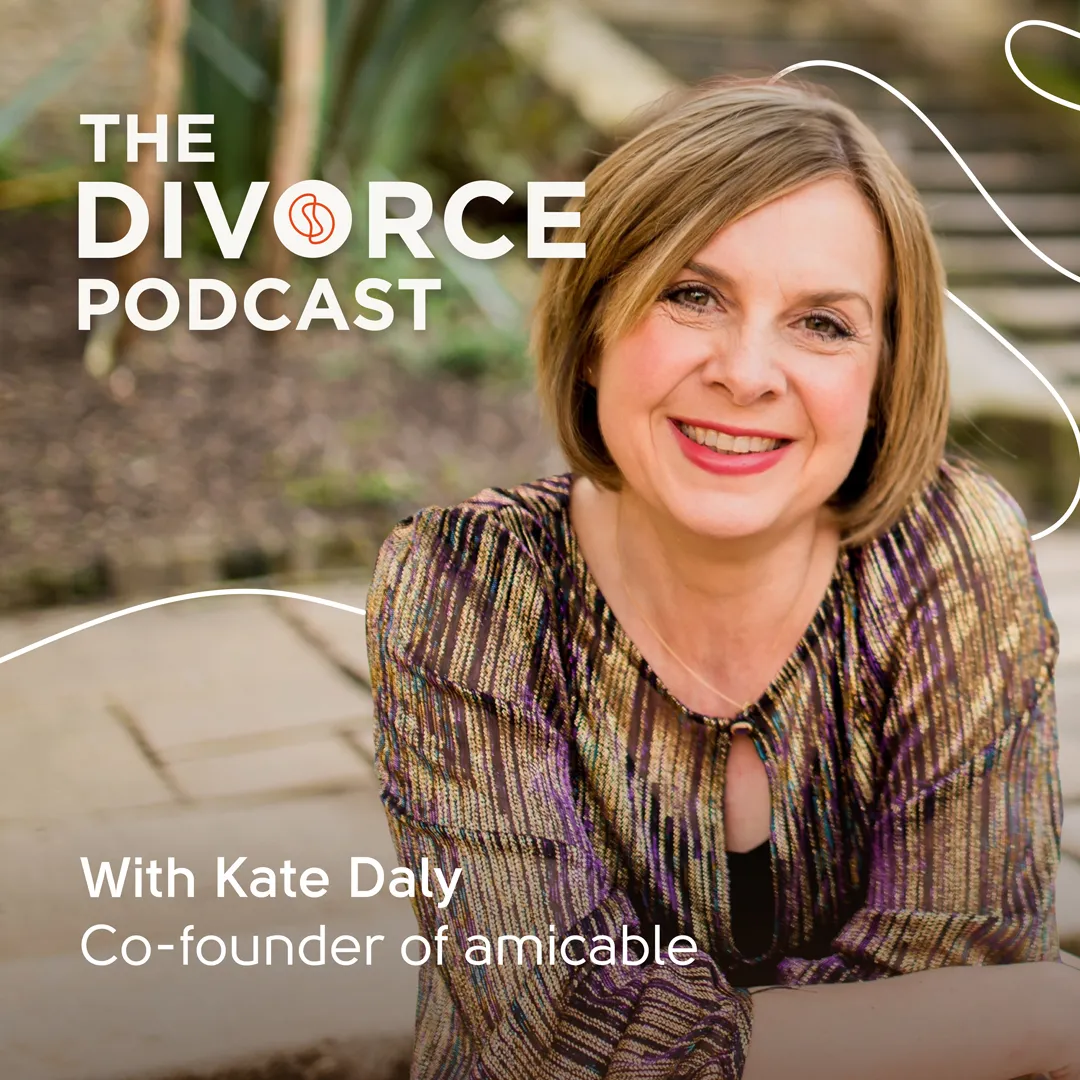
Welcome to The Divorce Podcast, where we explore relationships, divorce, separation, and parenting apart. This episode is part of our mini-series where we answer your questions, discuss current news and events, and share practical bite-sized tips. I'm your host, Kate Daly, a relationship counsellor, Divorce Specialist, and co-founder of amicable, the online legal service for separating couples. This week I'm delighted to be joined by Josh Gordon, Head of Digital Retirement at Octopus Money. Now, if you know somebody, a friend, a colleague, or a family member who would really benefit from knowing a bit more about pensions, then click the share button now. Welcome, Josh.
Josh Gordon 1:13
Hi, Kate. Thanks for having me.
Kate Daly 1:15
It's lovely to see you. Now, the context for our conversation today is that pensions are often the biggest asset in a marriage and sometimes even bigger than the family home. But they're the thing that people most often overlook when they separate. So in this episode, what we're going to do is try and bust some myths and answer some burning questions around pensions and divorce. So are you up for it?
Josh Gordon 1:42
Yeah, let's give it a go.
Kate Daly 1:44
Brilliant. All right. Well, myth number one then, even the name, the thing that we call pensions, personal pension plans. The first myth is it's my pension, it's in my name. So that means my ex can't touch it. True or false?
Josh Gordon 2:00
No, it's part, it's part of the assets. So a partial disclosure and divorce is honest and open disclosure of all your financial assets. Pensions come under that as well. Um, pensions, as you said earlier, quite often some of the biggest assets someone's got, worth often more than the house or their share of the house, certainly. So no, it always comes into divorce and cannot be ignored.
Kate Daly 2:21
Yeah. And I think that's one of the interesting things, isn't it? Because we do call them personal pensions, but the whole point about getting married is you're entering into a legal contract, which is basically that you're undertaking to share things if something goes wrong. And therefore the pension, as you rightly say, comes into that. But it is interesting, isn't it? Because I think it's not just that people want to keep their pension assets, it's often the other person who says, Oh no, they've worked really hard to build that up. And so I don't want to take it. And I hear that a lot. And I think that's another part of that myth, isn't it? That sometimes you've made choices in a marriage where one of you may have taken your foot off the, you know, career ladder or whatever to stay at home and raise children. And the act of doing that has enabled the other person to build up a pension. And therefore, it's a joint decision that one of you stays at home, you divide labor in that way, and therefore the asset is still shareable.
Josh Gordon 3:20
Absolutely. Um, it's a joint enterprise marriage, isn't it? So very often you see people getting divorced and one party has considerable pension wealth and the other one doesn't. And that is normally around caring responsibilities, where some person's left the workforce for a few years or many years, or returns to work in a lower earning capacity, and then therefore their pension wealth isn't as great. They haven't had the opportunity to contribute. They may be working in industry now that doesn't have such great employer benefits as they may have done previously. So it really has to come in. You have to look at these things jointly, what's been accumulated either through the period of cohabitation relationship or or throughout life, and look at trying to understand what that's really worth, what people are going to need out of that, and making sure any division of those assets is as fair as it possibly can be.
Kate Daly 4:11
Well, that's another myth, isn't it? So the other one is, oh, we've only been married a couple of years, and therefore my partner isn't entitled, or I don't need to share. But very often, as you just said, the C word, didn't you? The cohabitation word. If you've lived with somebody for 10 years or five years or however long before the marriage, does that count when it comes to sharing pensions as well?
Josh Gordon 4:36
Absolutely. So I think you you take two approaches. So you can look at a period of cohabitation through the separation or cohabitation through to divorce, or you look at the assets in their entirety. The longer the relationship, the harder it is just to limit it down to the period of cohabitation. Um, certainly if you've got children, it becomes more difficult to justify ignoring assets that have been accumulated before marriage as well. Our preference would always be when we're looking at these reports of people, and if they want a period that's for cohabitation, we'd also want to supply the full picture as well. So that way people are in a really nice informed position so they can make a better decision about it.
Kate Daly 5:14
So just tell us before we bust another couple of myths, then just tell us a little bit about what a pensions on divorce expert report actually is. We call them podes, don't we? We shorten them because let's face it, as I've just demonstrated, it is a mouthful. So a pod report is what it does, what, and what information do people need to have in order to get a pod report?
Josh Gordon 5:39
So a pod report is a valuation, a comparison of people's pensions. So it will show you what your pensions are worth, and that could either be in terms of what they're worth as a capital sum, what they're worth as an income to in retirement. It will compare each individual's assets, each individual's wealth and benefits from their pension scheme, show you what the difference between those two is, and show you different options in terms of equalising those benefits. And we say equalize, that can be 50-50, it can be a pre-agreed spit, it can be slightly different assets, um, different mixes than that. Commonly 50-50. It'll also show you the impact of, say, one party keeping more equity in the house and how that can be balanced out or the terms offset against their pension assets. So it's not a recommendation. We're not telling you what you should do. What we're doing is we're putting people in a root in the most informed position they can be so they can make a better decision about their divorce and about their financial settlement, not only on the here and now, but showing you what impact that decision will have or could have on their future in retirement as well.
Kate Daly 6:48
Okay, so that's interesting. So that kind of brings us on to another myth. I mean, I guess the argument is, well, I can I can see how to split my pension 50-50 from the CETV that comes through on my pension statement. Tell us a little bit more about why that isn't necessarily the case.
Josh Gordon 7:06
So that's a really good question, Kate. And I think the best place to start is the different types of pensions to begin with. So we have defined contribution pensions. These are your personal pensions, your modern-day workplace pensions. And I think if you get a statement from your pension provider and it says what it's worth, that's what it's worth today. It'll be worth something different tomorrow, it's different the day before. So that's relatively easy to look at what that pension is worth. But there are still some complicating factors around that. Then we have defined benefit pensions. So these are your final salary pensions, your public sector, NHS, local government, a few pensions still around in the private sector, and a lot of people who've got preserved benefits in these pensions in the private sector, where schemes have been shut down in the past. With those pensions, is where you get a CETV, which is a cash equivalent transfer value. This is calculated by the scheme based on the income you've got in the scheme when you left, when you're going to retire, what that income will increase by between when you left the scheme and when you retire, what it will increase by in retirement. And then chucked on top of that are lots of scheme assumptions around how much returns a scheme will make every year and other risk factors. Those factors differ across all schemes. Public sector is similar, but private sector has a huge range of differences there. So when you get a cash equivalent transfer value, that's just for that scheme. It's not necessarily comparable to any other pension, not even probably comparable to a pension that's exactly the same with another provider, another company scheme. So it's really difficult. So when we are looking at these schemes, we really need to look at them in a way that's comparable. We might need to look at the income they're going to produce and revalue that. Then if you're comparing that to, I don't know, equity in a home, well, that's not taxable. Or savings in the bank, again, not taxable in the same way. So again, they've we've got different layers that overcomplicate the situation or do really overcomplicate things, which is why we are here to help people understand what a fair outcome is for them.
Kate Daly 9:19
It sounds like algebra. You can't just say A plus B equals A B because that's not how it works. A plus B still equals A plus B, and you've got to work out what the value of A is and the value of B is. And so it sounds like that's the kind of work you've got to do. So it's too simplistic to say you can just take the CTV, divide it in two, and everybody will have equal or a fair share. Because again, the depending on when you retire, depending on whether there's an age gap, even if you've got two very simple or similar pensions that are defined contribution pensions, just splitting them 50-50 doesn't necessarily mean you'll get equal income in retirement. And really that's the calculation you're trying to do, isn't it? So you've got a you've got a product, haven't you, a pod report that people can purchase when they're going through divorce and separation. Tell us a little bit about that, because it sounds like this might be quite a game changer.
Josh Gordon 10:17
Yeah, so our the website is pensions ondeivorce.com. So we've taken a slightly different approach to this, um, sort of in line with the rest of the octopus money mission of trying to help as many people as we possibly can. Traditionally, these reports are expensive and slow. And if I miss, they're expensive and slow because there's quite a lot of work involved in them, and it takes quite a lot of time to get the information. So not having a dig at the industry, but they are expensive, which does put people off. And we're taking it.
Kate Daly 10:42
Yeah, especially when you're going through a divorce, you've already paid for a divorce and you're trying to split money. People are very cost conscious, understandably, at that point.
Josh Gordon 10:50
Absolutely. It's one more cost. Pensions aren't understood by many people in lots of times. So that's that's the thought of the pension industry, believe me. So we we've positioned ourselves to try to be much more straightforward. So we we have simple pricing. The pricing does increase the more schemes you've got. We we we price things flat to try to keep things fair, try to keep things consistent. We're making use of technology where we can as well to try to speed up this process, give better reports to people in plain English, trying to demystify this as much as we can do. Because there's no point getting a 30-page report you don't understand and having paid several thousand pounds for it. There's no value in that. Um, it could be correct, but if you need someone to help you interpret it, it's probably not very useful.
Kate Daly 11:35
Yeah, and they they charge you for interpreting it as well. I know this, obviously, the people that we help through Amicable, when we've had to send people off before to go and get pension reports, and these very long reports come back, and then actually actually charge you extra for interpreting their work. And I just find that incredible. It just doesn't feel like they're on the side of the consumer. It feels like the more complicated they can make it, the better, because they make more money. And you know, from an amical perspective, we hate anything like that. So this sounds like a much more straightforward every person kind of scheme. Fixed price by the sound of it.
Josh Gordon 12:11
Yeah, so fixed price, we charge a bit more if you've got defined benefit pensions because they are more complicated than just to find contribution pensions. But the aim is to make this from a price point as available to everyone as they possibly can be. It's easy to understand and as quick. We're well aware quite often people come to this a bit later in their divorce process. They maybe have not thought about it. They don't want things dragging on any longer. So we want to be able to turn these around as quickly as we can do. And the aim is to give someone a document or both of them a document, explains what they need to know, sit down, discuss it with them, um, answer any questions so that they can then move on within the negotiation or their settlement and get to a resolution that not only is fair, but in financial services, we we spend a lot of time making sure talk about consumer outcomes and consumer understanding. So it's not in that it's fair, but everyone understands why it's fair. Or if they're doing something that's slightly different, that everyone understands the implications of that. So what you don't want is to go through a re-traumatic period of your life, add more stress in, and then wonder whether you've done the right thing or not down the line. Because you can't.
Kate Daly 13:17
Yeah, and then I think with pensions, the easy thing is it they're very easy to dismiss because you're essentially you're just kicking the can down the road. You know, most people's priority in the middle of a divorce is I just need to know where we're living and what's happening with the kids. And rightly so. But if you ignore this, you are leaving so much potential value in that negotiation that you haven't thought about. And just kicking it down the road and waiting to see what's going to happen when you're 65, 70, and your options have narrowed because you can't work anymore and there isn't the time for a pension to compound, that becomes a really desperate mistake, doesn't it? So I think for me, this is all about being informed earlier on so you keep your options open.
Josh Gordon 14:03
Yeah, no, you're right. Uh you're leading sort of leading on to another point. If we we talk about the pension gap in financial services, so this is a difference between the amount of pensions that men generally accumulate, pension agenda gap, compared to women. So even more depressing stats when you come to divorce, and women in divorce in later life are more likely to be significantly worse off than their married counterparts, so divorce or men. So and part of that is because pensions haven't been taken into account through the divorce process, people may be possibly quite rightly prioritized housing and these other matters. But if you do that without understanding what's going to happen, you don't have the time to make make any difference to yourself. If you knew you may be uh taking a greater share of the house and forgoing pensions, at least if you understand what that's going to look like, there you then potentially have options to make up any of those shortfalls. So the key thing is using a report, at least you know what all your options are, and you're going into that process with your eyes wide open and making an informed decision.
Kate Daly 15:08
Well, let's just unpack that myth a little bit because this is perhaps the one I hear the most from a divorce perspective. It was certainly one of the things that I was very focused on as well when I was going through my own experience. But that I'll take the house, you take the pensions is perhaps the most common trade-off. So let's just unpack why that doesn't necessarily work. Because explain it to me, because it's I think it's a hard concept to grasp. Tell me about what compounding means and why a pension is so very valuable in earlier points in your life. So if you're in your 40s, like the most common age for getting divorced is 42 for women, 44 for men. If you're that kind of age, tell me about compounding and why, as a woman getting divorced at that point, I should not fixate on the house. I should actually pay more attention to the pension.
Josh Gordon 16:06
So really good question. Compound. So compounding is just the return you're making on your money. So pensions, if we talk about defined contribution pensions here, I think is the simplest thing. So your pension, and pensions get a lot of flack, but pensions are great. So you put money in your pension, you've got tax relief going into your pension. So the government have added if your base of rate tax pension 20% in some way to your pension fund, and more if you're a higher rate or additional rate taxpayer. Then when your money's invested in your pension, there is no tax on that money. It's growing completely free of tax. And then when you get to the end of it, you can take 25% of that tax-free cash, and the rest of it you can take as income and you'll pay income tax on that part of it. But compound D is magic, essentially, in many ways. So your pension earns 5% this year. It's gone up by 5%. So you've now had £100, it's now worth £105. Next year it goes up by 5% again. So you've had 5% on your original £100 plus 5% on top of your on your growth as well. And that happens time and time and time again. So it's not quite magic, but it's as close as we can get to the magic in the human world. The ability to have that money growing tax-free, behind the scenes, without a lot needing to happen to it, if it's invested properly, and if you've had it set up right, for 20 plus years, it's a huge benefit in the growth you make. Even if you're not able to contribute huge amounts to it, and and there are lot lots of things if you if you look on social media around this, about if you sooner you start saving the more growth you make. And it's all to do with compounding. Sooner you start saving little bits of money tucking away, it's it's fantastic. And I think that piece of I'm gonna take the house, I get that, and I speak to lots of people who really need a place to live. I understand that. But looking at that, house is great, it's worth money. Everyone in the UK loves property because we it's tangible, we can see it. Bricks and water great investment, as people will say, but it doesn't produce you an income, it's a cost, it's a liability, a house because you've got to look after it, you've got to paint it, got to decorate it. Things go wrong, got to repair it, has to ensure it. So, yes, it is an asset, but it's almost the opposite of a pension, where a pension doesn't really take much care as long as it's invested right, and people should get advice and guidance around sorting their pensions out. But it gives you an income. It's almost the opposite of the house scenario.
Kate Daly 18:36
And I think the difference between a high maintenance and a low maintenance girlfriend slash boyfriend, isn't it?
Josh Gordon 18:42
That that's one way of looking at it, absolutely. Um and it works for both parties. Both parties want to come out of a marriage with stability. I get that, but it's that balancing act where they may be better sharing some equity in the house, doing something slightly different in order to benefit themselves in later life. And that again goes to the other party, keeping all their pensions. So we're like, I want to keep my pensions, but what am I going to do about where I'm going to live? Do I have to go into rented accommodation? What what are my choices?
Kate Daly 19:09
Yeah. So this idea of pension should always be split 50-50, that's another myth, isn't it? Because what we're actually saying is if you get uh pensions on divorce reports, you'll be able to understand more nuanced options. And it is that it's the devil is in the detail with all of this, isn't it? And it might just be maybe you do only share a small portion of your pension, but that small portion, as you say, with the compounding effect, can have a disproportionate impact on the future wealth and comfortable status of somebody who may have had more equity, may at some point think they're going to downsize and sell and you know use that money to invest in a pension. But I often think people can get caught out that way because downsizing isn't the silver bullet. And very often downsizing doesn't realize the amount of cash you need to be able to invest in a pension or buy effectively an annuity at that point because you've run out of road and you've run out of time. So I think that's the that's some of the things to consider, isn't it?
Josh Gordon 20:14
Absolutely. A lot of people talk about downsizing. I spent a long time in financial advice and lots of clients say we're going to downsize in the future. It's part of the plan, but it's a difficult emotional stage to get to, but you you've lived in your property all your life. Do you really want to leave it if you don't absolutely have to? Or do you then do people move might move too late? So they might downsize when they no longer really have a need for the income, or it's just too late and it and they just don't get around to doing it. So I think the key is to understand what your situation, what your options are in your situation, what is the best compromise? And I think that's the right word here. What is the best or least worst compromise for everyone to take so that people leave that relationship in the best shape emotionally and financially as they can be? And there's always going to be an element of compromise involved in that.
Kate Daly 21:02
Just one final thing. So this myth about, oh, we'll just sort this out later. Pensions have rules around them. And one of the things you know you can't do is just casually share a pension. You have to have what's called a pension sharing order. So the idea that you might be able to sort it out later doesn't feel like that's necessarily part of this. What are the timings involved in sorting out pensions?
Josh Gordon 21:25
So it needs to be done within the final consent order. It has to be done. You can't, you can give someone money out of your pension. You could take it out, you'd pay tax on it and give it to them. But you can't give it the only way you can give another person a pension while you're alive is through a pension sharing order. So you you need to have that legal separation. As part of the consent order, that goes to court, that's stamped by the court essentially, and then goes to your pension scheme. They then have four months once you receive that to implement that pension share. And I think there's another myth around this, um, which we still hear a lot, is people don't want to do a pension share. Sharing order because it doesn't involve a clean break financially. So here a lot of people go, Well, I don't want to do that, so I don't want to be reliant upon my ex and what my ex does with their pension for my income. And it's really important that people understand the pension sharing order is an absolutely clean break. If someone gets a pension sharing order from their ex-spouse, that money goes into their pension or they get it, they get part of that pension. It is theirs and they can access it subject to when the scheme rules allow them to, without any requirement for their ex to be involved in that whatsoever. And I think that's really important that it does give that clean separation for people, which is what people tend to want in these situations. They want that complete break.
Kate Daly 22:38
Yeah, and you can find your own pension company, set up a pension yourself, you can take your own advice, it's then yours. It's literally a credit that goes from one pension pot to another pension pot, and then it's nothing to do, and it's done at the time of divorce. Because the other one I get is a lot of people think this doesn't happen until retirement. Well, it does, it happens right here, right now. And then it's up to you to make your financial arrangements. And one of the things people might need to do is take some advice to get a new pension set up that can receive the pension credit that they might be getting from a pension sharing order. Cool. Well, listen, Josh, in just a minute, I'm going to ask you to share some top tips for navigating separation with pensions. And I know nobody else would want to miss that. But just before I ask you about that, if this episode has given you a little bit of clarity or a bit of comfort, or it's just a tip that's made it feel all a bit more manageable, then please make sure to follow the divorce podcast on your favorite listening platform. Each week we're here with expert advice and real support to help you manage separation one step at a time. Now, Josh, final tips. If you could give somebody a little bit of advice if they're navigating divorce and they've got pensions, what would it be?
Josh Gordon 23:55
Start early, I think is the key thing. I think it can take quite a while to gather the information that's needed for pension schemes, especially with defined benefit pension schemes, getting that cash equivalent transfer value can take some time. The earlier you start, the more clarity you have in that situation. And I think that's really key. So start early, get all your paperwork together, engage professional help to help you with it as well. I think that's really, really key. It's a big transitional event. That's why people who like ourselves who do this, other people do this. That's that's what we're here to do. We're here to help people. So start early, get everything together, think about your financial situation holistically. I think. Don't go, we've got this money, we've got pensions. That might be the right approach, but be open to looking at things all together as well and work out what's right. And wherever possible, and I know it's not always possible, talk to your ex or soon-to-be ex, engage them in that process so everyone's aware. It's much better that everyone's engaged in that process, the whole process is open and as honest as it possibly can be. I think that's really, really important because you'll get better outcomes if you work on these things together.
Kate Daly 25:05
I think that's really good advice. And we mentioned before there's the octopus money pod report. How much does that cost?
Josh Gordon 25:13
So we have two prices. So if you have defined contribution pensions only, so these are your personal pensions, we charge £1,200. That's inclusive of VAT. If you have defined benefit pensions, because the extra work involved, we charge £1,800, and that's also inclusive of VAT.
Kate Daly 25:28
Brilliant. Well, that's fantastic. And where can people find out about the octopus money and the pensions on divorce reports?
Josh Gordon 25:35
So if they go to pensionsondivorce.com, um that's our website. Um, you can do a quote on there. There's information around how pension sharing works, what a PO does, what we do. So, and there's a bit of about the information about the about the team involved on that site as well. So go and have a look there. You can do quotes. The process is uh is managed online as much as possible. Someone will do a quote, they can buy the process. And the way it works when purchasing is you pay half the fee up front, give us your pension information, we review that. We might need to get some more information from you. Once the report's ready, we upload it. You can pay the additional second fee, the report's released to you, and then you can book a meeting with one of the team and we'll talk you through it.
Kate Daly 26:12
Brilliant. That sounds like a fantastic scheme. It just feels so much easier than anything else that's out there and what we've been used to. So I'm super excited and I hope anyone that's using the Amicable service will find that a real benefit and a real help. So thank you very much for sharing all of that today, Josh. It's been fabulous having a chat about pensions. Now, don't forget for separation and co-parenting support, you can visit amicable.co.uk where you can explore our resources or you can book a free advice consultation. You can find us on Instagram and you can find me on LinkedIn and hear about new podcast episodes by subscribing for updates and visiting thedivorsepodcast.com, or of course, you can find us on your favourite listening platform. Now we'd love to hear more from you and what would help more. So do share any questions on divorce, separation or co-parenting with us at hello at amicable.co.uk. You can also join our subscription platform, Amicable Space, where you'll find our community forum, which is a safe place to ask any questions as you go through separation or co-parenting. If you're a member, you also get free access to our monthly QA webinars with Amicables divorce specialists, and you can ask them questions in real time. The link to sign up is in the episode description. Josh, it's been fab talking to you. What a fantastic product you've got there. It sounds like a real game changer. Thank you very much for joining me today. And thank you, everybody, for listening.
Josh Gordon 27:40
Thanks, Kate.