Aaron Dale 0:00
Co-parenting is simply the relationship between the parents. I said my relationship with my child is a parenting relationship. And I think sometimes what we can do is we can confuse the two. So what happens is when people separate, they focus on the co-parenting relationship rather than the parenting relationship. And that's where your child misses out because all you're caring about now is what the other parent's doing.
Kate Daly 0:24
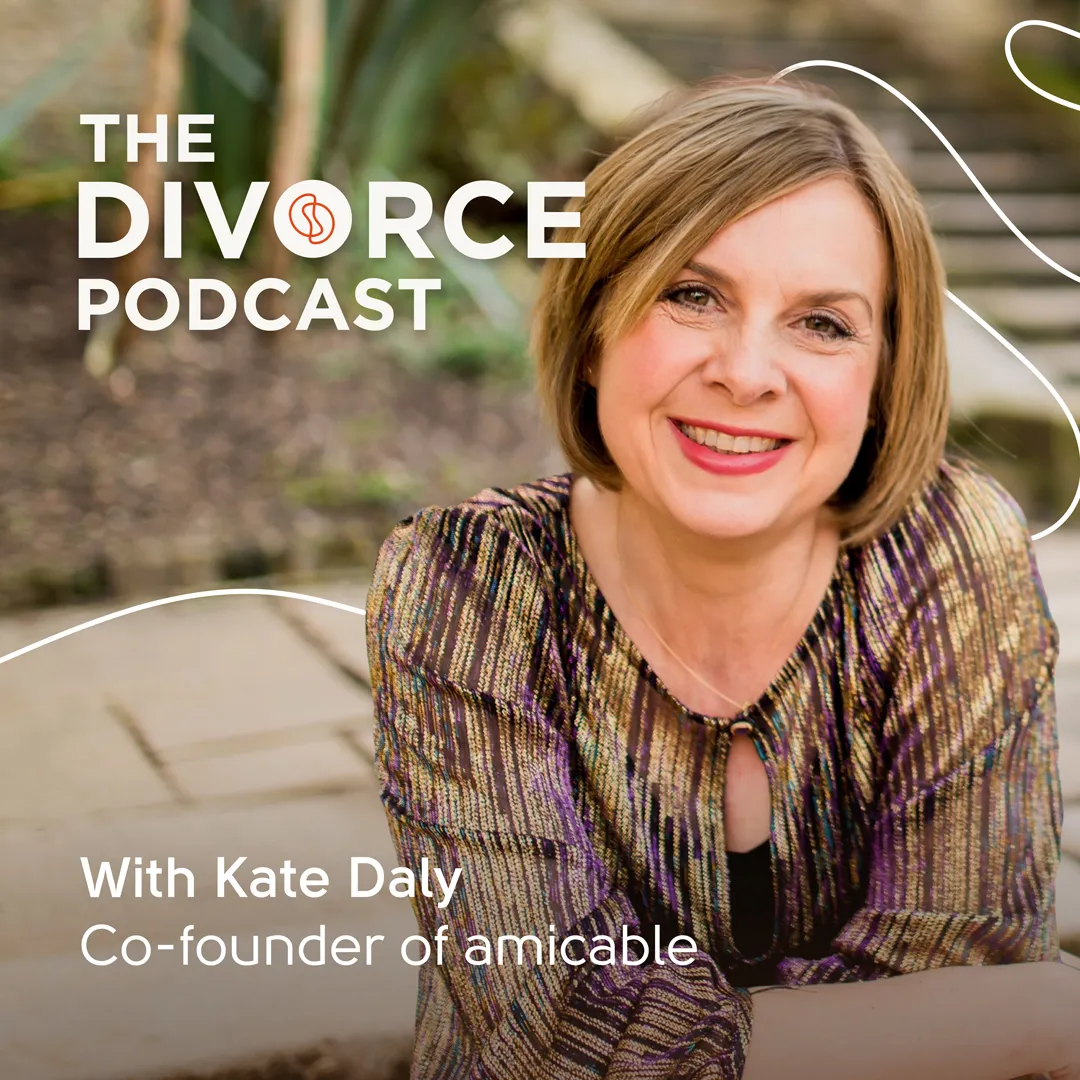
Welcome to the divorce podcast, where we explore all aspects of ending relationships, separation, and parenting apart. If your marriage or partnership has ended, or you have friends and family who are separating, this podcast is for you. I'm Kate Daly, a relationship counsellor, divorce specialist and co-founder of amicable, the online legal service for separating couples. In each episode, we look at relationships and separation from different angles, including the emotional, legal and social. I'm joined by experts and special guests who share their own unique stories, experience and tips with the goal of helping people end relationships in a kinder and better way. This week I'm delighted to be joined by Aaron Dale. Aaron is a father, author, speaker and creator of Raising Boys to Men, an parenting and co-parenting platform, reaching over a million people across social media. Drawing from over 18 years of lived co-parenting experience, he combines personal insights with practical conversations around parenting, accountability, and family life. Now he's recently released his first book, The Co-Parent, a toolkit for parenting together apart, designed to help families create loving, stable environments for children regardless of how their parents' relationship ended. Trigger warning. This episode touches on content that some listeners might find distressing, including domestic abuse, abuse in childhood, controlling behaviour, and poor mental health. If this is something that's affecting you, you'll find organisations that can help in the show notes. Welcome, Aaron.
Aaron Dale 2:10
Thank you. I love that intro. Thank you.
Kate Daly 2:13
It's an amazing bio that you've got. What an incredible journey you've had. Why don't we start at the beginning then? Tell us a little bit about your backstory and how you grew up and the influence that childhood had on where you've got to today.
Aaron Dale 2:29
Okay, so I was raised by just my mum, and the way I always put it is that my dad was in a relationship with another woman, and that woman gave birth to my sister. My dad then cheated on that woman, and I am the result of that.
Kate Daly 2:46
Right. Okay.
Aaron Dale 2:47
If that makes sense. Yeah,
Kate Daly 2:48
okay.
Aaron Dale 2:49
So me and my sister are a year apart, but then my dad ended up going back to the woman that he had my sister with, and they continued on their family. Me and my eldest sister kind of knew who each other was, but I have two younger sisters who at the time didn't. So it was kind of always kept from them.
Kate Daly 3:10
So you they're you as a family then you're carrying a lot of secrets and a lot of kind of
Aaron Dale 3:16
Yeah. I think I'm just navigating childhood. I'm just me. I'm just with my mum. My dad would wouldn't really come and see me, but I knew who my dad was.
Kate Daly 3:26
Yeah. So you knew you had a father, you knew he's there, he had another life, you and your mum got on with it.
Aaron Dale 3:32
Yeah, and I knew my mum always told me that is your sister. That was never kept from me. And I think their family was having different conversations. We should not tell our children what's happened. You've
Kate Daly 3:45
got a clash of parenting style even at that very early stage, yeah.
Aaron Dale 3:48
So I think that was you reflect back as an adult completely different to the experience you have as a child. So I think as a child, I'm just navigating through it. But as a as an adult, I look back and I think, how was that for me? Not being able to actually have time with my dad and not being able to actually engage with my sister because it doesn't exist. We've got to keep it from them. That's not really a nice way for a child to navigate childhood.
Kate Daly 4:13
But I think you're right, as kids, we just get on with it, don't we? And I was saying to you before we started, I always ask my kids what's it like growing up with a single mum? And they're kind of like, yes, it's normal.
Aaron Dale 4:23
And
Kate Daly 4:24
as a kid, you just you just accept it, don't you? But you've come a long way from being a kid. You've ended up with this amazing social media following talking about stuff like this. What impact do you think that that start in life has had on your adult life?
Aaron Dale 4:41
Oh, a massive one. I think I was carrying a lot from childhood that I wasn't aware of. And like you said, with your own children, sometimes it's easy to say, oh, it's normal, or yeah, it doesn't bother me, because you don't also know how it's bothered you. Because how you're living is normal, you're not tapping into the fact that wait a minute, how you're feeling isn't normal. It's actually quite unique, but you don't know how to express that. So as I began to grow, became a father myself, went to therapy, started to really unpack my own childhood, had relationships that didn't work out, you start to see patterns and you start to then realize, oh, okay, you know what? I'm carrying that from my childhood, or that is a result of that, and you start to connect dots, or at least I did anyway.
Kate Daly 5:29
I mean, you just said something there that you kind of casually said, Oh, I went to therapy, like that's the most normal thing in the world.
Aaron Dale 5:35
Yeah.
Kate Daly 5:35
It's not usual for men, particularly young men,
Aaron Dale 5:39
to
Kate Daly 5:39
go to therapy. So what had happened to get you to a point where you kind of felt that therapy was what you needed.
Aaron Dale 5:47
As a child, I remember having some sort of therapy, but it wasn't life-changing. I think we had my mum ended up with a partner who was quite abusive, and that was around the age of 11. And I think there was therapy as a result of that, but I can't remember that. And one thing I learned later in life is that when you have trauma, your brain ends up blocking out that part of your childhood or that period of time. So maybe that is why I can't remember certain things. But actual therapy that I remember was just after lockdown. So it wasn't too long ago, and it was the result of a relationship. I'd got into a relationship, I really thought that this person was the one. It didn't end up being that way. I would say I wasn't treated quite as fairly and nicely as I should have been treated. And it just made me realize: you know what, there's a pattern here of getting into relationships and them not working out. Maybe there's something you're doing or not doing that needs to be addressed. So I decided to go to therapy.
Kate Daly 6:47
That's quite reflective in itself, isn't it? So you've grown up in a household where you've got your mum, you've got an absent dad, and then the next kind of male figure that comes into your life is abusive. What does that do to your perception of a man's role in a family at that point?
Aaron Dale 7:04
That's a great question. And I think this is the problem I had. It's not knowing what a man actually is. Like, what is a positive example of a man? I remember this isn't something I've really touched on before. My nan had a partner, and to me, he was granddad. And he ended up passing away when I was probably about seven. But that was a man I remember looking at, and he I support Chelsea. My love for Chelsea is because he supported Chelsea and he was the only man around me, and he would go to the games and get me a football, a book, a matchbook program and get me the kit, and he really showed love for me. So that was a positive example, but I wasn't really around him that much. But then when you're seeing how your mum is treated by men, that's when you start to look at things a bit differently. Because, okay, I'm living with a man now in the home, and it's the first time I'm living with a man in the home. And you're seeing a man walk around with his top off, you're seeing how he carries himself. So this is a living example of what a man is like, and you're seeing him put hands on your mum and put hands on you. And I guess I just didn't feel safe. And then I started to feel this pressure of my job is to protect my mum.
Kate Daly 8:25
Not unusual in a single parent household, is it?
Aaron Dale 8:28
Yeah, and I think he ended up leaving, my mum got rid of him, but that feeling of okay, I now need to be the protector of this house, started from probably around that age. And that was something that probably was more pressure than I realized because I should just be a kid enjoying myself, but instead I'm thinking about the bills in the house and I'm making want to make sure my mum's good and I can help out. And that isn't something that a child should really be carrying.
Kate Daly 8:56
But so if there are people listening to this then, like we're and single parents, how do you protect a child from that? Can you protect a child from that? Or does it go with the territory? And the best you can hope to do is have an open conversation? Like, could your mum have said or done something to help you not feel that way?
Aaron Dale 9:15
I think as boys, naturally, we have that internal instinct of and I guess
Kate Daly 9:22
So do you think it's an internal instinct? I
Aaron Dale 9:23
definitely do, and I think society plays a massive part as well, right? In making, especially young boys, feel that men are strong and men are leaders, and men are this and that. And you just kind of naturally, every man, every child, every son wants to protect his mum. Regardless, I just think it's there. We love our mums, our mums are our queens, we want to protect them as much as we can. And when you feel that there isn't another man in this house doing that, you feel the pressure even more. One of my things sometimes is when a lot of people say the relationship hasn't worked out with my child's father, therefore I'm not gonna date. I'm not gonna,
Kate Daly 10:02
I'm
Aaron Dale 10:02
gonna remain single forever. And I think you're you're not only losing out on an opportunity for you to experience something beautiful, but your child to experience something beautiful as well. And that is, I guess, could my mum have said anything? No. I don't think there's anything my mum could have done apart from maybe have been in a healthy relationship. I think if my mum was in a healthy relationship, I would have looked at that and felt, okay, I don't need to
Kate Daly 10:30
I can
Aaron Dale 10:30
relax a bit more now.
Kate Daly 10:31
That's so interesting. I've never seen it from that perspective before. I've seen it from the the risk of bringing an inappropriate man or a man that doesn't work out into a relationship feels quite big to me. That's certainly my perspective. And therefore, that feeling of not being able to trust yourself to bring the right relate to create the right relationship has personally weighed very heavy on me. So that's so interesting to see it from the other perspective of what are you effectively letting your kids miss out on without having that other positive role model there?
Aaron Dale 11:05
Upon reflection, I just wanted to see, and to this day, I just want to see my mum be loved. That's it. I just want to see someone treat my mum so well, put a smile on her face, because that makes me feel good. So it's not necessarily about what my mum could have done or said to me, it's just me wanting better for my mum.
Kate Daly 11:24
Yeah. And do you think that relationship, that sort of growing up in that sort of that place where you you're still trying to protect and you're playing that role, has that shaped how you parent your kids now? Because you've got two amazing kids, haven't you? And
Aaron Dale 11:41
yeah.
Kate Daly 11:42
And how do you parent them as a consequence of that lived experience?
Aaron Dale 11:46
I think there's two parts to that. So I think the seeing how my mum was affected me in relationships with women.
Kate Daly 11:54
Well, let's start there then. So let's so we'll rewind then. So we'll skip the kid bit a minute. Let's go back to relationships then. So that experience of seeing your mum and the way that she formed adult relationships, tell me how that impacted you then.
Aaron Dale 12:08
So for me, I felt like I developed a saviour complex. So this need to save women. And what I noticed is as I was going through life, I was more drawn to women that needed support, needed help, maybe had been treated badly. And then there was this, I don't know, this desire to, I want to help you. I want to make things better for you. And that would sometimes keep me in relationships that I know is not right for me. But if I felt like I was of value, I was of use, I felt safe.
Kate Daly 12:41
Yeah. And it was giving you something, wasn't it? It was obviously giving you that feeling of worth and value and shaping your identity, presumably.
Aaron Dale 12:48
Because that's all I'd known. All I'd known from a young age was helping pay bills in the house, helping do certain things. So then you get into relationships and you feel as a man, this is what I'm meant to do. So if I met a woman, for example, I did meet a woman at one point and she was doing extremely well financially, successfully, and I ended up stepping away from that before we even got into a relationship because I felt there's no space for me here. There's
Kate Daly 13:17
no role, yeah. Yeah, you don't, you do
Aaron Dale 13:18
not need me. I needed to feel needed.
Kate Daly 13:21
Right.
Aaron Dale 13:22
And because you don't need me, therefore it's not safe for me here. I can't be of value to you. So I would, I would, yeah, I wouldn't be drawn to those type of women.
Kate Daly 13:32
So you had to have a value to somebody in order to be in a relationship with them. Just being you
Aaron Dale 13:39
wasn't enough.
Kate Daly 13:40
Wasn't enough. Well, maybe you didn't even know who you were without all the bits of what I do.
Aaron Dale 13:46
Yeah, and my therapist said I had a conversation with my therapist, and he said to me, he said, How would it feel to be in a relationship with someone and just feel that they was there just for you and you didn't need to do anything, you could just be you. And I said, I don't feel that exists.
Kate Daly 14:02
Right, you're interested. I just
Aaron Dale 14:03
I don't feel that that that's real.
Kate Daly 14:06
Yeah, very interesting. Did you pick a male therapist on purpose?
Aaron Dale 14:10
Not on purpose, but I was allocated a male therapist. I feel like therapy is something I want to continue to do. So I'd love to go back into it, and I feel a female therapist would actually be quite interesting. Yeah,
Kate Daly 14:22
it'd be interesting at this point, wouldn't it?
Aaron Dale 14:24
Yeah.
Kate Daly 14:24
Yeah. What um how hard is it to do therapy as a man?
Aaron Dale 14:28
I think it's hard to get there. Did you
Kate Daly 14:30
tell your mates?
Aaron Dale 14:32
Yeah, yeah. I'm very transparent. I feel like I'm around, I've got a good circle of friends as well. And I think the men around me, we hold ourselves accountable. We're not afraid to pull each other up if we don't feel that person's doing their best. And I think that's where you grow. I think when you're younger, I say this to my kids now. I say, why are those your friends? And a lot of the times my kids will say, Oh, because we like the same games, and it's it's very fickle, right? And it's not because they have deep conversations or they and as you get older you realize, oh, I was just hanging around with people because we like the same football team or we like this. So now to have a group of men around me that I genuinely connect with on a deeper level benefits me, benefits me greatly.
Kate Daly 15:18
Hugely. Who was the hardest person to tell about the therapy then?
Aaron Dale 15:21
I don't think there was anyone. I even told, I even told my kids. I even told my kids, I think the hardest part for me was I'd put that, I'd put therapy off from probably the age of 20. My mum was saying, you need to go to therapy, you need to go to therapy. And my my thought process was, what's the point in speaking about things that have already happened? Nothing can be done to change it. And that was my thought process. But then to finally get there, it was like, okay, I wonder how this is gonna be. I had no idea what my therapist would look like. I spoke to him on the phone, and then we had our first session, and I remember him opening the door, and he looked younger than
Kate Daly 16:00
me. And
Aaron Dale 16:03
that was a moment of, oh, oh, wow. I don't know. Am I gonna feel comfortable? Like, can you really help me? As
Kate Daly 16:10
if it's any consolation, you get used to it as you get to my age. Everybody looks younger than you're just like, okay.
Aaron Dale 16:16
But it was this feeling of like, can he really help me? What does he know about life when but um he turned out to be amazing?
Kate Daly 16:24
Yeah. So you have relationships, you start to find yourself, and then how do you come on to have children and what kind of family environment are you raising your kids in?
Aaron Dale 16:34
So I had my eldest when I was 21, 22. And to be honest, me and his mum hadn't been together for long, probably just under a year. The relationship wasn't in a great space, it wasn't planned. So it was one of those moments where you're pregnant, we now have to figure this out. So then you're forced to try to make it work, which can sometimes make it worse. And we broke up pretty much as soon as he was born. And from there, I went into what I call control mode. I needed to control everything. I needed you, you, you as the mum, need to listen to me. I need to be in control of this. This is how it needs to work. And I think a lot of that had to do with the fact that I hadn't really seen two people parent. My mum and dad never parented, and I never saw them co-parent. So, in my eyes, if you're either together as a father and present, or if you're not together, you're not present.
Kate Daly 17:34
So there's no in between. There's no in between.
Aaron Dale 17:36
So in my mind, well, if we're not together, I'm still involved, and the only way I can be involved is look, is if I control you and the situation. And that just created so much.
Kate Daly 17:48
So, what sort of things in those early co-parenting days were you trying to control?
Aaron Dale 17:53
Um, where she was going. I I wanted to know where you're going, who you're around, who you're speaking to, what you're spending money on. If you're getting money, where's it like I I needed to know everything. Can it be? So at
Kate Daly 18:04
this point, are you together or we're not women? So you've separated.
Aaron Dale 18:08
And I'm still struggling to and you're still
Kate Daly 18:10
struggling to let go of that of the relationship, essentially. And what kind of co-parenting arrangements did you have? How were you involved?
Aaron Dale 18:17
At the start, I wanted to just do what I wanted to do. When I want to come and see my child, I will come and see
Kate Daly 18:24
my child. You need to be in. I
Aaron Dale 18:26
would call up and want to see my child within the next few hours, which is unrealistic, but it's what I want to do. Okay, in terms of money, I will give you what I want to give you when I want to give it to you.
Kate Daly 18:37
So you didn't have a conversation at that point about like how are we going to co-parent? What are we going to do? What's your role? What's my role? What's a schedule? How are we going to pay for this child? You didn't have those kinds of what we would call parenting plan conversations. There
Aaron Dale 18:50
was no parenting plan. I didn't even know what a parenting plan was. So it was upon reflection now, when I think about my son's mum, the stress she must have been under, to you've just given birth, you've gone through all these bodily changes. So to now be navigating parenthood, and you've got this man who is meant to be the other part of this journey. He's just making your life more difficult, he's stressing you out, he's running you down, he's not, he's not even praising you. He's not well done for everything you've done, you've given birth. Oh my gosh, everything is negative. I look back on that and I I just feel guilt that I also I probably ruined because that's her only child as well. So I I ruined what should have been a beautiful experience for her because my ego and my fears and worries were so loud.
Kate Daly 19:43
And what would you what would you want to go back and say to yourself if you were being compassionate?
Aaron Dale 19:49
I would honestly think about how much you love your mum. And the reason why I'd say that is because my mum is everything to
Kate Daly 19:57
me.
Aaron Dale 19:57
And after a while, I I began to realise that my son's mum is everything to him. And if I could just have had that connection, I wouldn't let anyone talk a certain way to my mum. No one can tell me anything about my mum. I love my mum. So if I'm putting down or making my son's life's my son's mum's life difficult, imagine how he would look at me if he knew exactly what was going on. So it would be that moment of if you really care about your son, if you really want what's best for your son, you have to respect that woman. You have to protect that woman and you have to support that woman. I would have had that conversation.
Kate Daly 20:41
That is absolutely fascinating, and it really rings true, doesn't it? Because ultimately that bond that the child has with either parent needs protecting and support from the other one, doesn't it? Whatever happens, whatever your differences are.
Aaron Dale 20:56
There's a beauty in you both have a unique role to play. And I think a lot of the times we're trying to compete with each other.
Kate Daly 21:01
Yeah, why is that then? Why are we competing with each other? Why isn't there enough? It's a massive job raising a child. A
Aaron Dale 21:08
massive job.
Kate Daly 21:09
Why isn't there enough space for both parents?
Aaron Dale 21:12
And I think it's because we're, I mean, even down to little things like who's gonna spend Christmas with the child or who's gonna take the child to Chesenton. I want to be the one. I need, I remember me and my son's mum, it was, I think it was his second or third birthday, and we decided to go to Chesenton. And I didn't want to give up missing out on that, and she didn't want to, so we was like, you know what, we'll just go, knowing that we weren't on good terms, but we're gonna go to Chesenton together as a free. That was the most miserable experience we could have had.
Kate Daly 21:46
But lots of co parenting type books kind of recommend this stuff, don't they? Like trying to do things together. And you know, we've just had a media piece put out about co parenting at Christmas, and I've just said, just if you can't, if it's too much, don't feel guilty. Do it, it's just too much pressure.
Aaron Dale 22:02
You can't force it
Kate Daly 22:03
on yourself.
Aaron Dale 22:03
You can't force a relationship, any relationship, even man and woman, like you can't force it. And why would you want to? I always say this your children pick up on energy.
Kate Daly 22:14
Yeah, that's it. And
Aaron Dale 22:15
even though words are not spoken,
Kate Daly 22:16
or they don't have the words, or they don't
Aaron Dale 22:19
have the words, you and mum might not have a word to say to each other. You might just think, oh, but we're not arguing.
Kate Daly 22:24
Yeah.
Aaron Dale 22:25
Your child pick on that, pick up that energy, and that energy will make them feel a certain way. And I always say, have you ever walked into a room? No one said a word, but instantly you think, What's happened? Yeah. Without anyone saying a word. Children are walking into kitchens or living rooms, feeling that every day.
Kate Daly 22:41
So you got to a point then where it's not working as a co-parent. Did that turn around, or did you have your second child before that turned around? Did that relationship resolve or not? I mean, it doesn't have to, it's not a fairy tale. So I don't, I'm not gonna push you down that road.
Aaron Dale 22:57
I mean, we never, I'd probably say throughout my eldest son's life, me and his mum have, we've got a respect for each other, but you won't catch us on the phone having long conversations. You won't catch us, I don't know, like meeting up at a birthday and doing certain moments in his life, we've come together. But outside of that, it's very much, I know when I'm seeing my son, I know how much I'm paying every month, therefore, me and you, respectfully, we don't need to
Kate Daly 23:25
speak.
Aaron Dale 23:25
You don't need to
Kate Daly 23:26
speak, yeah.
Aaron Dale 23:26
We don't need to because we both know our role. I think what often happens is when there's no consistency, when there's no routine, when there's no structure, you and the other parent now need to communicate more because you're you're having to ask, well, I want to see my son next week. Let's get a routine in place. No, I don't want to put a routine in place. Well, then you're gonna have to have this conversation every time you want to see your child. And that's where arguments and conflict just keep arising.
Kate Daly 23:52
So you're definitely a proponent of get it planned, get it sorted.
Aaron Dale 23:55
I'm a big fan of, in terms of a parenting plan, in terms of certain conversation, have them before anything goes wrong. You've got reactive and you've got proactive. I think what often happens is we react to something and now say, you know what, let's get a parenting plan in place. If the moment you both decide this relationship isn't really working, but we're on good terms, you know what? Let's sit down and map this out. It's such a healthier time to do it, and you're more likely to stick to that than coming to the table with resentment and anger and frustration.
Kate Daly 24:23
And points to prove and score and
Aaron Dale 24:26
exactly. So I would I would be a big fan of having that parenting plan in place as soon as possible.
Kate Daly 24:32
Yeah. No, I think that's a very sound advice. So you've gone from then having one child, how did you then have your second child? How quickly or slowly after that relationship did you then?
Aaron Dale 24:44
So when my eldest son was about two, I met the mother of my youngest, and we were together for she actually said this to me the other day, like five years, but that was on off, on off at times. It was very sporadic. And again, child wasn't planned. Pregnancy came at a point when we weren't on great terms, and it just felt to me. I'm repeating a cycle, it's the same. Another child, not planned. Oh my gosh, I'm I'm about 28 at the time. My only child at that point is about six. So I was just frustrated, frustrated with myself. Like, A, why are you staying? If you're not happy in a relationship, why are you staying in it? Because now look at what's happened.
Kate Daly 25:30
Do you think you resolved the answer to that question in terms of why you were staying in relationships that weren't fulfilling? I'm sorry, this is like a therapy. No, it's
Aaron Dale 25:38
beautiful, it's actually beautiful. I think I've never actually looked at that. I just think sometimes you don't want to be the one to end a relationship. I think that a lot of the time it's it's you may even start to act out just in the hope that the other person will
Kate Daly 25:55
be.
Aaron Dale 25:55
Well end
Kate Daly 25:56
it for you. Yeah, I can see that.
Aaron Dale 25:57
And I think there was times when maybe we were, we had a pattern where I might do something I shouldn't do, and now I feel guilty. So I now start behaving like I start trying to fix everything. You then do something you shouldn't do, you feel guilty, and we're just not wanting to be the bad. We're
Kate Daly 26:17
missing each other as well, aren't you? No one's making the effort at the same time. No one's making an
Aaron Dale 26:21
effort at the same time, and no one, I don't feel I don't know if anyone really wants to be here, or if it's more, I just don't want to be the one that's ended it. So then you you're just in this pattern. The pregnancy was confirmed, and it was damn. And even that feeling to not be excited, to not have the joy of, oh my gosh,
Kate Daly 26:42
I've got a child on the way. Yeah,
Aaron Dale 26:43
so to know I've had two amazing sons, but I've never had that moment where oh my gosh, you're pregnant, we're pregnant. Like that's something that I that frustrates me. So then, yeah, we again we split up quite soon after the birth. And then I'm looking at myself, saying to myself, I've got two children from two different relationships, I'm becoming my dad.
Kate Daly 27:06
So that sense of history repeating itself is weighing very heavily at you.
Aaron Dale 27:10
Heavily on me. And there was this moment where I just said to myself, these boys are gonna be, they're not gonna know they're half-brothers, or they're gonna feel just complete. And I guess from then it was just my mission to make sure, you know what, I show up as the best version I can for them and that they never feel separated.
Kate Daly 27:29
Yeah, so it's a complete rejection of your own kind of experience and making a clear decision to want to do things differently.
Aaron Dale 27:37
It had to be done differently because I I refuse to be him.
Kate Daly 27:42
Well, that's a really strong message for anybody. Lots of people fear, don't they, that repetitive cycle that we all do with parents and things, that we don't want to repeat the same mistakes and things. So just and knowing that you are not them is a real fundamental in feeling your own self-identity, isn't it? So that must have been a what was happening in your life to get you to that point.
Aaron Dale 28:04
When we think about becoming a man, sometimes we can think it's age-related, right? So you can think, like I remember when my son turned 18, he was like, I'm 18 now, I can do certain things. And I said to him, the only thing that's changed between you being 17 and 18 is the fact that you went to sleep and woke up.
Kate Daly 28:22
Yeah.
Aaron Dale 28:23
I said, nothing else has changed. You haven't become anything different. Like the world may give you access to certain things, but you are exactly the same person. But
Kate Daly 28:32
it's so funny because I said to my son, the criminal justice system will treat you differently, so you better behave. I love that. But in terms of in terms of in
Aaron Dale 28:41
terms of who you are, you are still the same person. And I said, your age will not make you a man, life experience will. And for me, becoming around 30, looking at myself as I've got two children from two different relationships, I'm still living at home with my mum, my finances aren't in order. It's like, what are you like? You're just freestyling life and it's not getting you anywhere. So we now need to address this. And I think my biggest, one of my biggest takeaways from therapy as well, is I was parenting from a place of lack. So what I was doing is I was being the parent that I wanted. So when I was younger, my hope was that I would have a dad to take me to football. And I never had that. That man was never there. I never got taken football by a man. It was just a void. So then I always said to myself, when I have children, I'm gonna take on football, I'm gonna do this. So I've now got two sons, I'm giving them football kits, trying to get them into football. They've got no passion for football.
Kate Daly 29:43
Oh my god. They've got no
Aaron Dale 29:45
passion for football. And rather than tapping into what these boys actually like and love, I was tapping into what my younger self needed. So I always say it, I was becoming the father that I needed rather than the father my children needed.
Kate Daly 29:59
That's such a super distinction. It's lovely, and it's that must have taken a lot of work to get to that point.
Aaron Dale 30:05
Yeah, and it's still, even to this day, I think it's just having those moments when I always say this question your own belief as a parent. If you genuinely think I'm an amazing parent, look for things that might work against that. Like, oh, you know what? Well, I haven't really been on time the last few times I've got my kids. Look for areas because that's where you can improve. I think the worst thing we can do is say, I'm a great parent.
Kate Daly 30:27
I don't think many of us do say that they do. Even in
Aaron Dale 30:29
those moments, probably somewhere from
Kate Daly 30:31
the other thing, even more part of the world.
Aaron Dale 30:34
Which is beautiful that you said that. Even when you say, you know what, I'm just a terrible parent. Look for things that work against that. Actually, you know what? I'm there for my kids every time they need me. You know what? Like, question your own belief as a parent because it will improve you.
Kate Daly 30:49
Yeah, that's a lovely sentiment. And this is now turning into mutual therapy. So thank
Aaron Dale 30:54
you.
Kate Daly 30:55
Tell me about the setup now, then. So you've got two kids,
Aaron Dale 30:59
they've
Kate Daly 30:59
got different mums. How do you co-parent then? Do you co-parent, or is there a better term for it than that?
Aaron Dale 31:07
Yeah, so I always say co-parenting is simply the relationship between the parents. I said, My relationship with my child is a parenting relationship. And I think sometimes what we can do is we can confuse the two. So what happens is when people separate, they focus on the co-parenting relationship rather than the parenting relationship. And that's where your child misses out because all you're caring about now is what the other parent's doing. And you're missing. The only reason you're there is because of your relationship with your child. So if we have two people that come together and focus on their parenting relationship, the co-parenting relationship should naturally find a way to work. But the issue is the fact that we're just so obsessed sometimes with she's not doing this, he's not doing that, he should have, she should have, and what's happening with the with the child? So for me, it was finding what worked. So having my kids at the same time.
Kate Daly 31:59
Right, yeah,
Aaron Dale 32:00
was
Kate Daly 32:00
but that's no mean feat, is it? When you've got multiple households and we all live in very complicated setups now, don't we? If you've got, if you're meeting people and we're having more relationships throughout our lives and what have you, there could be several families involved. The just the sheer logistics of that statement, I see my kids together, feels kind of quite a big thing. How have you done that?
Aaron Dale 32:22
I give credit to the mums for allowing it. Even for Christmas, for example, I know my youngest mum is very, my eldest son's mum, when it comes to Christmas, she's not too fast. My youngest son's mum very loves Christmas, very family oriented, two completely different dynamics. So knowing that my rotation with my eldest, so one year I'm waking up with him on Christmas, the next year I'm not, to have the conversation with my youngest son's mum and say, Look, would you be happy to I know it was hard for her because she wanted that, but she was willing to say, you know what? A, because it gives your son a chance to have that time with you, but also he gets that bonding time with his brother. So seeing the brothers, my sons, wake up Christmas day together has been priceless. And I think that's that's what it's about. The fact that she, as a mum, was able to say, I want my child, like I know she did. She would love to have every Christmas, but she was able to, in that moment, say, you know what, it's not about me. Your son would love the opportunity to wake up with his brother and his dad. So then we just had that rotation with both the boys.
Kate Daly 33:33
Yeah. And then on a really nitty-gritty kind of point, then, how do you have those conversations? Like, are you texting each other? Are you being on the phone together? How have you got to a point in your relationship where that conversation, that level of lack of self,
Aaron Dale 33:48
yeah,
Kate Daly 33:48
kind of selfishness, how do you get to that point then?
Aaron Dale 33:52
I think, again, two completely different women with different personalities. So, my eldest son's mum, everything's text-based. We don't really get on the phone, we don't really talk. My youngest son, me and his mum just have a good, healthy relationship. I've got a good relationship with his grandma, with his uncles. So it's me and her talking was never was never an issue. So those things, and I think it's just adapting to who you're talking to. Not everything has to be done on the phone, because sometimes I call them, I call them red zones. So a red zone is an area where you know danger may occur. So, for example, you may know every time I'm on the phone, we get into an argument. So the phone is a red zone, so don't go into the red zone. Let's communicate by text, let's communicate by email. You may think, you know what, every time we try and do uh get together at the park, something happens. Well, then that is a red zone. Don't go into it. You don't have to walk into those areas, there's other options, and being mindful of your red zones. Like if me and my eldest son's mum got on the phone in the early days, we would argue. So clearly, why are we getting on the phone? Let's let's just keep it text-based. And that's all that was needed.
Kate Daly 35:06
So you've got your children, you you're doing your co-parenting, it's working different ways for different family members. How do you get from that then to then doing what you've done professionally, creating the podcast, writing the book? So tell us about the podcast, tell us about the book.
Aaron Dale 35:25
I think it was to me just a blessing, an organic blessing. I think sometimes you have to be open to where life is taking you and pay attention to the science, so to speak. I went on a I originally had a fitness page. It was a fitness page, and it was just, I guess, a personal page where I would just show myself in the gym or talking to the camera. It wasn't anything serious. And I went on a friend's podcast and he asked me something about my childhood, and it was the first time I spoke about my dad. And then the feedback from that was really positive, and people wanted to know more, but also I felt good talking about it. It was like I've never spoken about it. You know what? That was actually quite nice. So then um I ended up going back on his podcast and talking about some more stuff, and then I just thought, you know what, I'm gonna talk about this on the platform. So I just literally one video after another video, that really worked. That didn't work as much. Okay, my audience seemed to love that, and you just start listening to what your audience. I think the biggest thing we can do to block our growth is be adamant, it has to be this way. I think sometimes you can go in with a plan, I'm gonna make this type of content and everyone's gonna love it. Before you know it, no one's buying into that. But that one video you did, everyone loved.
Kate Daly 36:45
So they could they can people can sniff the authenticity of it, they can see when it's coming from a genuine place.
Aaron Dale 36:52
Yeah, and I think one of the turning points for me was it was January 2022. I'd just broken up with my girlfriend at the time, and I was heartbroken, and I know before then she wasn't happy with me. She she had insecurities, so obviously the platform has a lot of single mums, so there would be women in my comments, I would respond to those comments respectfully, but that was an insecurity for her, and then because of that, I said I would hold back on certain content I would create, I wouldn't be as interactive. And I had a thousand followers, we broke up January 2022, I then said I can now create the content I want to create, I can comment how I want to comment, and literally that year everything took off.
Kate Daly 37:41
Wow. So that was part of your personal growth story, yeah.
Aaron Dale 37:44
Yeah, it was that feeling of like don't allow if if people really love you, if people really want to see you win, then they're gonna support that. They're not gonna make you feel guilty, they're not gonna make you feel bad, they're not gonna make you feel like, well, you didn't do this for me, so I'm not gonna do it for you. People that genuinely want to see you win, you'll feel that. And if you haven't got that around you, let go of those people.
Kate Daly 38:06
So at that point, do you still have a regular job? So this isn't, yeah. I was working in the
Aaron Dale 38:12
government, yeah.
Kate Daly 38:13
So you're working for the government, you're doing a regular job, you're doing this on the side. How did it take off then to what it is now?
Aaron Dale 38:20
There was just certain videos that just went completely. So
Kate Daly 38:24
it's content, it was
Aaron Dale 38:26
pure content, pure content that just I'm talking about within five months. I went from 1,000 to 60,000. And then at the end of the year, I was on a hundred thousand, and I was like, okay, this is a bit weird. And I remember going to Lidl, no, Audi. I was going to Audi. And as I'm walking to Audi, this girl runs up to me. She's like, Oh my gosh, you're that guy.
Kate Daly 38:47
And I was like,
Aaron Dale 38:49
Wow, that was the first experience I'd had where someone recognised me. She was like, Me and my sister love you, oh my gosh. And I thought to myself, this is this is going somewhere. I didn't quite know where, but I was like, This is going somewhere. And then I just think the problem a lot of platforms have is you have to be motivated to post content. And I think I think you really have to be, if you're trying to grow a social media platform, you have to be disciplined. There's days I haven't wanted to post, I haven't wanted to make content, and it could have been, oh, I'll just leave it. No, I've continued to go, go, go, go. And I remember I was working in the government and the platform was getting big. And everyone at work thought that I was with the mother of my children. Everyone at work thought that my children had the same mum. Not because I'd told them.
Kate Daly 39:41
Just the assumption.
Aaron Dale 39:42
Because yeah, because I'd never told them otherwise. And it was because I felt embarrassed. When we first started, I remember I first started my job, there were 11 of us starting together, and there's people having conversations, like getting to know each other, having conversations. Oh, yeah, I've got two kids. Oh, just oh yeah, I'm married. And it got to me and it was like, Oh, how many kids have you got? Oh, I've got two boys. And at the time I was in a relationship, and it was like, Oh, um, how's your partner? And I was
Kate Daly 40:10
like,
Aaron Dale 40:10
Yeah, my partner's great.
Kate Daly 40:11
Yeah, they
Aaron Dale 40:12
then put the two together. Yeah,
Kate Daly 40:13
yeah, yeah. And
Aaron Dale 40:13
I you
Kate Daly 40:14
let them put the two together.
Aaron Dale 40:16
And I just never had that moment where I said, actually, I'm not with them. And um, as the platform's getting bigger, people are then starting to work it out, and I didn't care at that point. But I um yeah, I left my job last September.
Kate Daly 40:30
Okay. And who is your audience then? Because I I made the assumption that your audience would be dads, but actually, from what you're
Aaron Dale 40:38
absolutely
Kate Daly 40:38
just not, is it? A lot
Aaron Dale 40:39
of men, a lot of men were very resistant to the platform. A lot of men felt that I was catering too much to women, that I was just saying things to please women, and that was how it started off. And I think sometimes as men we don't like being held accountable, we don't like someone putting up a mirror to us. Because I always say, if you've been triggered, that's because something's going on within you.
Kate Daly 41:02
Yeah.
Aaron Dale 41:02
Yeah, I saw
Kate Daly 41:03
that on your comment. I was looking at some of your comments, and these I see you say that a lot. That's about you. It's about you,
Aaron Dale 41:09
and I think it's not about the content I've made, it's about you. And um my my audience has been pretty much 70-65% women, which is yeah.
Kate Daly 41:20
I'm super conscious of time, so tell us about the book. Tell us about the book.
Aaron Dale 41:24
So the book is called Um The Co-Parent, A Toolkit for Parenting Together Apart, and it's the book that I wish I had when I first became a parent.
Kate Daly 41:32
It sounds like it's quite a practical guide, then.
Aaron Dale 41:35
It's very much so. Yeah, I wanted a book that, regardless of where you are in your parenting, co-parenting journey, you could pick this book up, regardless of you may be at a point where you're thinking, Should I end this relationship? There's a chapter in the book that explains and gets you to think about that. Okay, I've just ended the relationship. How do I now navigate this? There's a chapter in the book for that. Okay, I'm now thinking about dating again. There's a chapter in there about that boundaries, child maintenance, therapy. Every possible step of that parenting journey is touched on within the book.
Kate Daly 42:10
And aimed at men, women, or who cares?
Aaron Dale 42:13
All individuals, all parents. I'd say, regardless of whether you're a co-parent or not, this book is for you. You can reflect, you can learn. I challenge you in the book. There's certain things within the book where you're challenged to reflect and look at yourself. I say this all the time. This book is not about improving your co-parent. This book is about
Kate Daly 42:31
a mistake people often make, isn't it? Here, I bought you something. Exactly that. A lot of
Aaron Dale 42:36
people have said, Oh, I wish my child's dad would get this book. And I say to them, I wish you would.
Kate Daly 42:41
Yeah.
Aaron Dale 42:41
Because I want to change your mindset.
Kate Daly 42:43
Yeah. Well, that's you can only you can only control your own behavior. Trying to change somebody is why we fall out of lots of relationships, isn't it? It just doesn't work.
Aaron Dale 42:51
It doesn't work.
Kate Daly 42:51
And you can only control the controllables, which is yourself. So oh, it sounds like a fascinating book. And if you were sitting here now, or you are sitting here now, thinking about people who might be listening to this, and you could put yourself in their shoes. What is the one bit of advice you would want to leave people with, you know, reflecting on your own journey, reflecting on the book and everything else that you've done?
Aaron Dale 43:14
I think it's important to remember that just because the relationship didn't work out doesn't mean you failed. I think a lot of the times we can look at successful parenting as two people being together, living together. And I think sometimes that can be the worst thing for your child. I always say sometimes the breakup is the blessing. Sometimes the best thing that may have happened to your child is the fact that you as parents decided to separate. And if we can look at successful parenting as raising a healthy adult rather than creating a happy child, because we have many happy children that grow into very toxic adults.
Kate Daly 43:49
Yeah, it's a lovely, lovely distinction. And you're right, it is about not necessarily just perpetrating the myth of 2.4 children and a happy, you know, intact family. It's a kids need happy parents. If ultimately you're happier apart, then that's an environment you're going to raise better kids in, isn't it? And like you say, it's about raising decent adults at the end of the day. That's fascinating. Well, we've run out of time. It's been
Aaron Dale 44:16
beautiful.
Kate Daly 44:16
absolute pleasure talking to you. Thank you so much, Aaron. Where can people find out more about you?
Aaron Dale 44:22
So you can follow me on socials at raising boys underscore to men. There's also, if you're looking to work with me, there's a platform called the Co-Parent Support Network where you can find the website www.coparentsupport network.com. And yeah, and hopefully my own podcast soon.
Kate Daly 44:39
Brilliant. Well, we look forward to uh hearing that. It sounds fascinating. Don't forget for separation and co-parenting support. You can visit amicable.co.uk where you can explore our resources or book a free advice consultation. You can find me on LinkedIn and Instagram, and you can hear about new podcast episodes by subscribing for updates and visiting thedivorcepodcast.com or on your favourite listening platform. Now don't forget, we'd love to hear how we can help you further. So please share questions on divorce, separation, and co-parenting with us at podcasts @ amicable.co.uk. And you never know, they might just be the topic of a future episode. Thank you, Aaron. It's been a genuine pleasure, and I've really enjoyed finding out a little bit more about your journey today.